 Neopolis Infra
Kokapet vs Financial District vs Gachibowli: Where to Buy in 2026
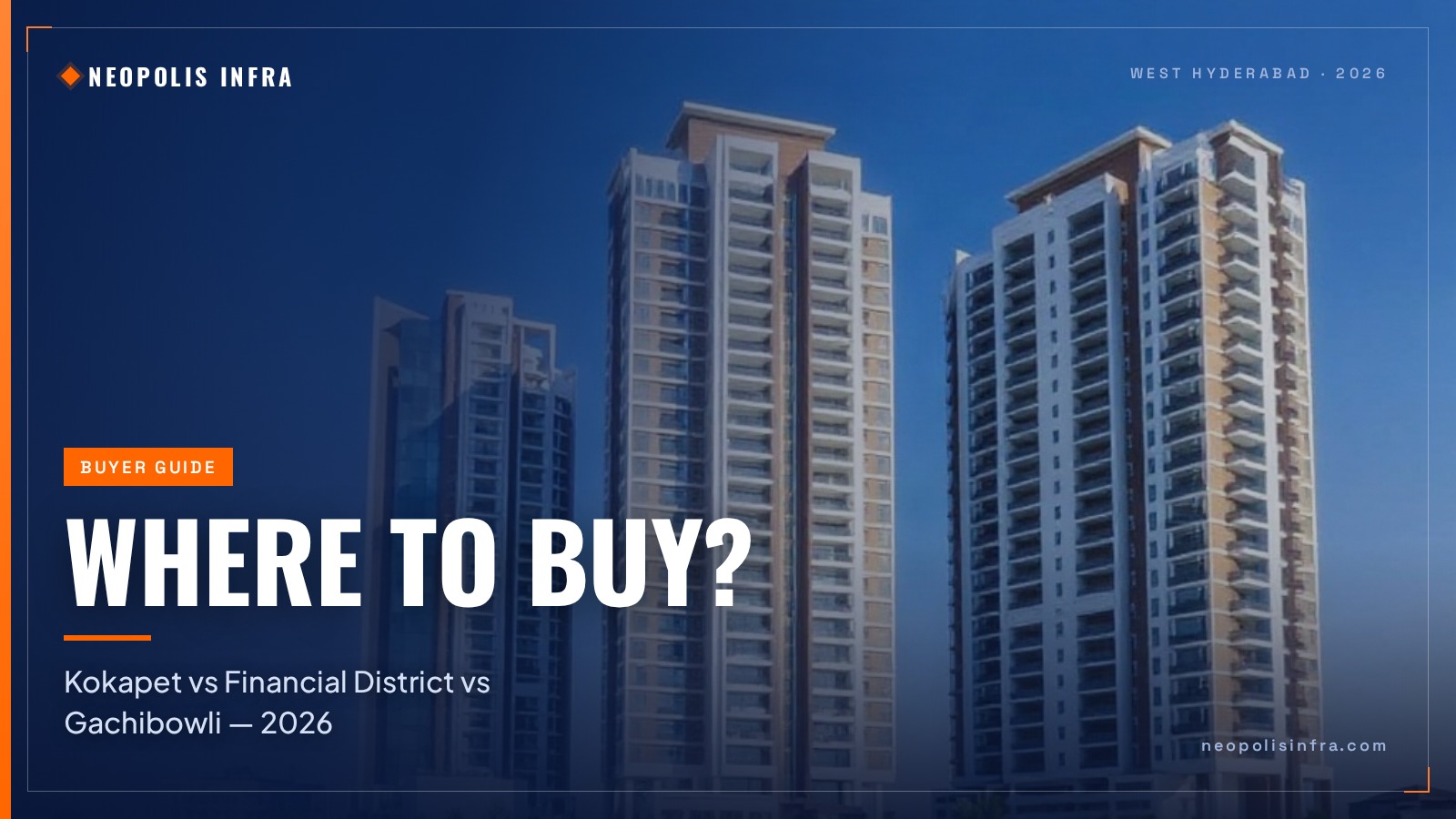
Kokapet, the Financial District and Gachibowli are the three most-searched addresses in West Hyderabad — and buyers constantly ask which one to pick. The honest answer is that they suit different goals: Gachibowli is the established, ready-to-move rental play; Kokapet is the greenfield appreciation play; and the Financial District is the walk-to-work premium in between. This guide compares them on price, yield, appreciation and commute so you can choose the one that fits your money — not the hype.
If you want the one-line version: buy Gachibowli for immediate rent and resale depth, Kokapet for five-year capital growth, and the Financial District if living next to the office core matters most. All three are premium; none is a mistake. The mistake is paying the builder's full price when the landowner's share of the same tower sells for less.
The quick answer: which corridor for which buyer
| If you want… | Best pick | Why |
|---|---|---|
| Rent from day one | Gachibowli | Ready stock, 4–6.5% yields, deep tenant pool |
| Maximum appreciation | Kokapet | Greenfield Neopolis plan, ~100% over 5 yrs |
| Walk to the office | Financial District | Inside the corporate core |
| Best resale liquidity | Gachibowli | Mature, established resale market |
| A brand-new premium tower | Kokapet / FD | Most new launches are here |
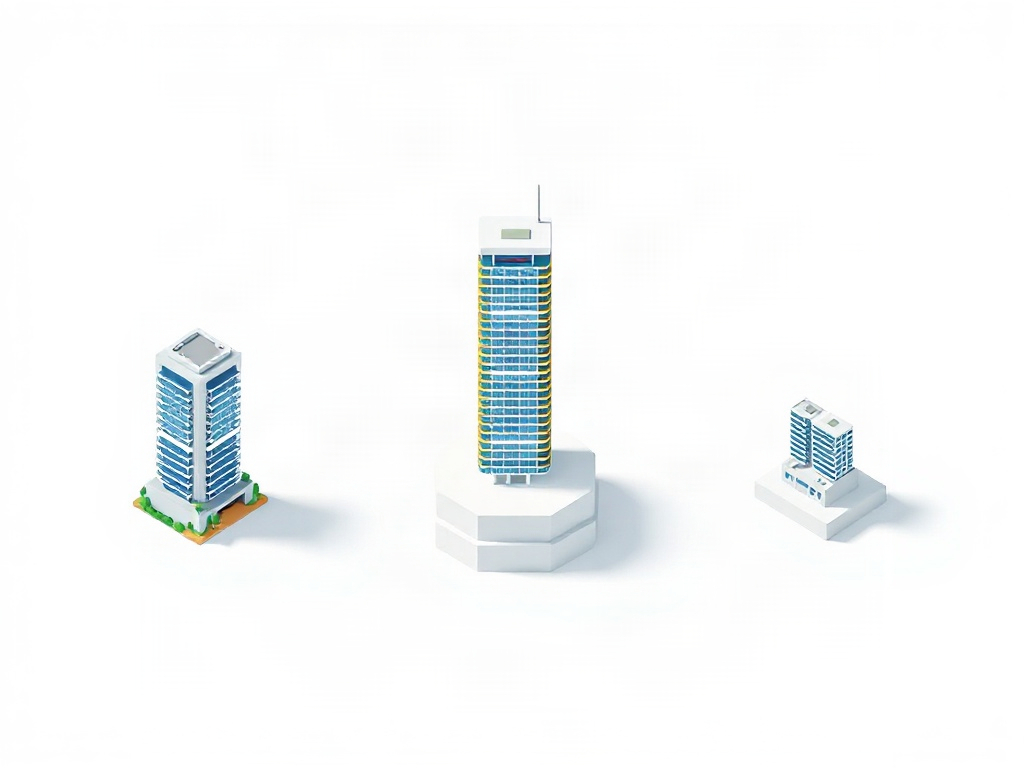
The three corridors at a glance
Gachibowli is a mature IT and corporate hub — Microsoft, Amazon, Infosys and dozens more — with existing metro connectivity, schools, hospitals and a large ready-to-move housing stock. It is the "already arrived" corridor.
Kokapet (and the adjoining Neopolis layout) is a government-planned greenfield premium zone. Most of its towers are still under construction, delivering across 2027–2030, which is exactly why its appreciation runway has been so steep. It is the "next wave" corridor. Our Kokapet area guide goes deeper.
The Financial District (Nanakramguda and around) is the office core itself — the offices that power Gachibowli's and Kokapet's demand. Homes here are premium and rental demand is constant. See the Financial District flats guide.
Price, yield and appreciation compared
Indicative 2026 figures — treat as directional and confirm current numbers before you commit:
| Metric | Kokapet | Financial District | Gachibowli |
|---|---|---|---|
| Price ₹/sq.ft | 9,500–12,700 | 8,500–12,000 | 9,800–14,350 |
| 3 BHK ticket | ₹1.8–2.8 Cr | ₹1.6–2.6 Cr | ₹1.6–2.5 Cr |
| Rental yield | 3–4% (to ~6% furnished) | 3.5–5% | 4–6.5% |
| 5-yr appreciation | ~100% | strong | ~50% |
| Inventory | Mostly under-construction | Mixed | Mostly ready |
The pattern is clear: Gachibowli pays you more rent *now*, Kokapet grew more over five years, and the Financial District sits in between with the shortest commute.
Connectivity and commute
All three are minutes apart on the ORR. From Kokapet, the Financial District is ~5–10 minutes and HITEC City ~15–20; from Gachibowli, the Financial District is ~3–7 minutes and HITEC City ~5–8. Kokapet is closer to the airport (~25–35 min); Gachibowli has the edge on existing metro. If a short daily commute to the office core is your priority, the Financial District and Gachibowli win today; Kokapet closes the gap as its infrastructure and metro Phase 2 arrive later this decade.
So which one should you actually buy?
Buy Gachibowli if you want rental income immediately, a ready flat you can move into, or the deepest resale market. Buy Kokapet if you can hold 5–7 years and want the steepest appreciation from a brand-new premium township, and you are comfortable buying under-construction. Buy in the Financial District if being able to walk or drive five minutes to work outweighs everything else. Many seasoned investors hold both a ready Gachibowli unit for yield and an under-construction Kokapet unit for growth.
If budget rules the three out, step one ring outward to Narsingi, Tellapur or Kollur for the same corridor at a lower entry — see the full best-areas guide.
The smarter question: builder price or landowner share?
Whichever corridor you choose, ask one more question before you sign: *am I buying the builder's flat or the landowner's?* In almost every project here, a portion of the units belongs to the landowner under the joint-development agreement, and those identical flats typically sell 8–14% below the builder's price. On a ₹2 crore Kokapet flat, that is ₹16–28 lakh. Read the landlord-share guide, the safety and title checklist, and how the price gap works.
*This is general information, not investment advice. Figures are indicative and change; verify current prices, yields and approvals and take independent legal and financial advice before buying.*
What most buyers get wrong
Two mistakes recur. The first is buying Kokapet's appreciation story without the patience it demands — signing for an under-construction unit delivering in 2028–2030 and then needing to sell in two years, before the growth has played out. If your horizon is short, the ready-to-move liquidity of Gachibowli is the safer corridor. The second is the opposite: parking money in a mature market purely for "safety" when your actual goal was maximum growth, and then feeling underwhelmed by steady single-digit appreciation. Decide first whether you are buying income or growth — the corridor follows from that, not the other way round. And in all three, judge the specific project (builder track record, RERA delivery history, price versus the corridor average) rather than the corridor's reputation alone; a weak project in a great corridor still underperforms.
Frequently asked questions
Kokapet or Gachibowli — which is better in 2026?
Gachibowli is better for immediate rental income, ready-to-move flats and resale liquidity, thanks to its established IT tenant base. Kokapet is better for long-term capital appreciation as a government-planned greenfield corridor, but most of its stock is still under construction. Choose Gachibowli for income and Kokapet for growth.
Is the Financial District a good place to buy a flat?
Yes, if proximity to the office core matters to you. The Financial District (Nanakramguda) has premium homes and constant rental demand from the offices around it, with a commute measured in single-digit minutes to the corporate hubs.
Which corridor has the best rental yield?
Gachibowli, at roughly 4–6.5%, driven by a deep, salaried IT tenant pool and low vacancy. Furnished premium units in Kokapet can also reach ~6%.
Which appreciates faster, Kokapet or Gachibowli?
Over five years Kokapet has appreciated more (around 100%) because it is a newer, government-planned corridor; Gachibowli, being mature, appreciates more steadily. Over the last three years Gachibowli has still delivered strong growth.
Is Kokapet worth buying if it's mostly under construction?
It can be, if you can wait for 2027–2030 delivery and want the appreciation upside. Buy only RERA-registered projects and verify the title — and consider the landowner-share route to cut the entry price.
How do I pay less in any of these three corridors?
Buy the landowner's share of the project instead of the builder's — the same flat is usually 8–14% cheaper. Verify the JDA and title first, or use a desk that lists only pre-verified landlord-share units.
The bottom line
Kokapet, the Financial District and Gachibowli are not really competitors — they are three answers to three different questions. Want rent and a ready home? Gachibowli. Want five-year growth from a new township? Kokapet. Want to live beside the offices? The Financial District. Pick by your goal, buy RERA-registered and title-verified, and take the landowner's share to enter any of them for 8–14% less. Tell us your goal and budget and we'll line up verified flats in the right corridor — message us on WhatsApp.
Landlord-share projects we cover in Kokapet
Neopolis Infra represents landlord-share (landowner-share) units across leading West Hyderabad developments — the same flats, direct-priced 8–14% below builder rates. Projects include MoonGlade · Rajapushpa Pristinia · SSI Fortune Grande. See all projects →
Tell us your corridor and budget — we reply on WhatsApp, usually within the hour.
Chat on WhatsApp →